from The Free Press, July 16, 2025, this excerpt from
The White Man Who Pretended to Be Black to Get Published by River Page
<<<
Several years ago, the man calling himself “Jasper Ceylon” was trying to break out as a poet, writing under his real name—which I’ll share in due course—and he noticed that certain journals had what he described as “really weird, and quite specific requirements”:
“I just was not in the demographic they would even consider accepting in some cases. They were openly advocating on their websites for the voices of the disenfranchised and all of this stuff. I’m like, Wow, it would probably be a lot easier to get in if I had some sort of connection to one of these identities.”
Ceylon is far from the first person to argue that English-language publishing is overrun with what my colleague Coleman Hughes calls “the new racism”—that is, instead of giving everyone equal opportunities, regardless of the color of their skin, editors actively perceive certain races as worthier than others. (This view of the publishing industry has been disputed.) Nor is he the first person who’s attempted to expose it.
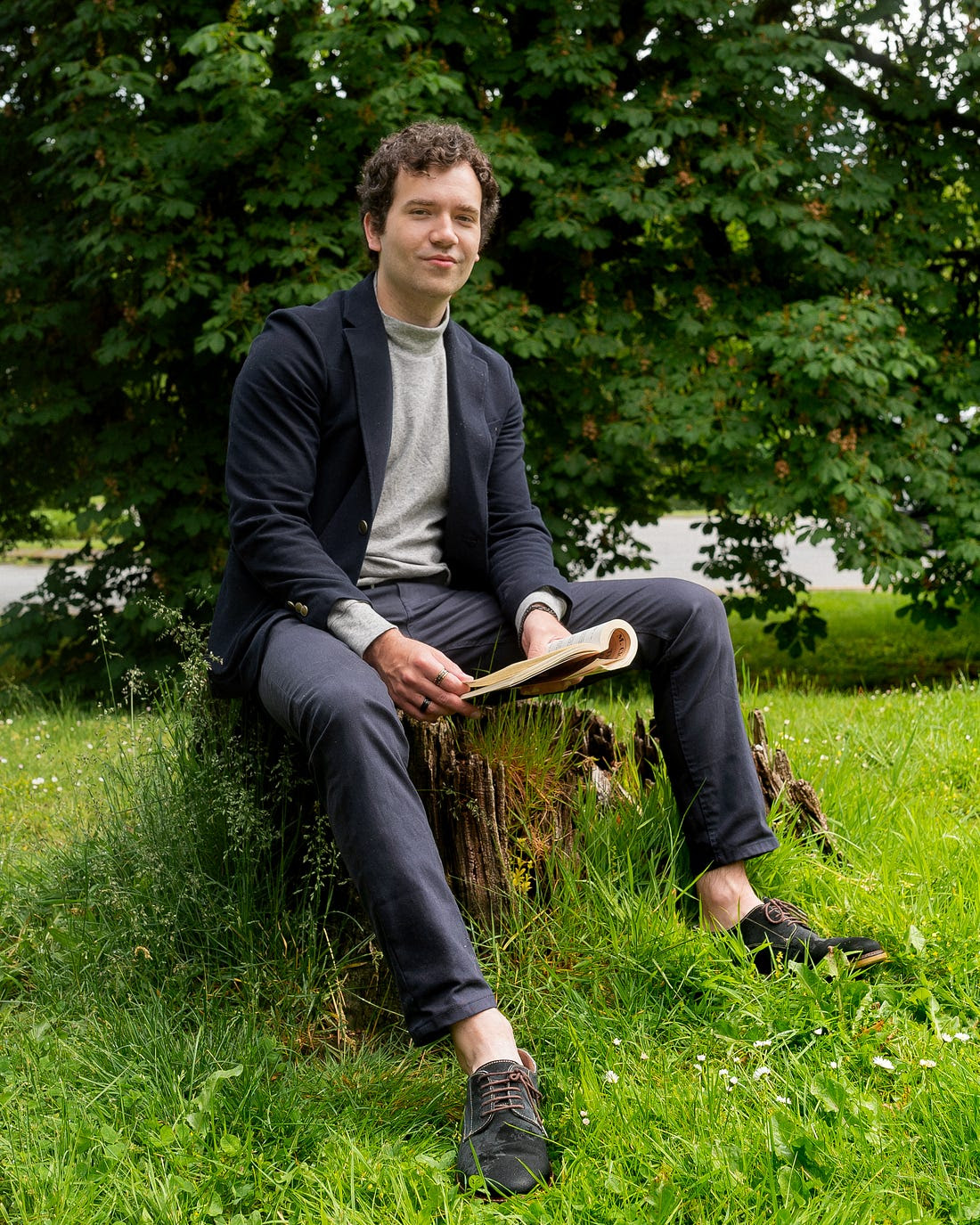 |
“It would probably be a lot easier to get in if I had some sort of connection to one of these identities,” he wagered. (Photo by Connor Murphy)
In 2015, Michael Derrick Hudson, a middle-aged white librarian in Indiana, saw his poem “The Bees, the Flowers, Jesus, Ancient Tigers, Poseidon, Adam and Eve” rejected by publishers 40 times. This inspired him to try submitting it under the pen name Yi-Fen Chou. After that, his poem was promptly published and included in that year’s annual Best American Poetry anthology. When he was found out, Hudson was accused of “yellowface.”
Yellowface is also the name of R.F. Kuang’s award-winning satirical 2023 novel, which follows a white plagiarist who steals the work, and Asian identity, of a Chinese author whose book she is editing. (Many reviewers noted the parallels between Kuang’s novel and Hudson’s story, although there’s no evidence the latter plagiarized.)
According to Ceylon, this preference for minority voices disadvantages those who society sees as most privileged—namely, white men. Statistics are hard to come by, but anecdotes are plentiful. As novelist Joyce Carol Oates tweeted in 2022:
“A friend who is a literary agent told me that he cannot even get editors to read first novels by young white male writers, no matter how good; they are just not interested. this is heartbreaking for writers who may, in fact, be brilliant, & critical of their own ‘privilege.’ ”
Now, three years later, we have a president who has declared that DEI mandates are over and white men deserve civil rights protections, but it’s much harder to change an industry, and a culture, than it is to change the occupant of the White House. For now, there are still plenty of young, straight, white men who feel publishing’s obsession with identity politics has kept them boxed out—and they’re angry about it. This is the story of one of these men, whose obsessive quest to expose what he saw as the absurdities of the publishing industry quickly spiraled out of control.
 |
“The first poem to ever get picked up was the ‘yah jah gah hah’ one,” Ceylon told me, when we first spoke. He was referring to one of two poems he published under the name Adele Nwankwo in a print edition of Tofu Ink Arts Press, a publication dedicated to “amplifying the voices of the under-represented and marginalized.”
Ceylon was shocked that the poem—which begins with a Toni Morrison quote about “navigating a white male world” and contains lines like “voodoo prak tik casta oyal drip drip”—was accepted. “It was very obviously nonsense,” he laughed. “Just fake bad Creole.” (Tofu Ink Arts Press didn’t respond to a request for comment.)
Ceylon told me he was inspired by various literary hoaxes, including the 1943 Ern Malley hoax, where conservative writers James McAuley and Harold Stewart published many, many parodies of modernist poetry, to make fun of a genre they found superficial and stupid. He also mentioned the more recent so-called Grievance Studies Affair, where the academics Peter Boghossian, James Lindsay, and Helen Pluckrose published a number of bogus papers in academic journals between 2017 and 2018—including one that claimed dogs engage in rape culture, and another that included passages from Mein Kampf rewritten in modern jargon. They, like Ceylon, were trying to prove that in their intellectual sphere, you could get anything published if its politics were progressive, even if it was bad.
>>>
<<<
Ceylon walked me through his process of creating elaborate characters with over-the-top biographies and terrible writing styles. According to him, whenever editors asked to meet on Zoom or record his voice for readings of the poems, he could just brush them off with comments like, “Oh, I don’t like the sound of my own voice.” When they asked for pictures, it was easy to just decline.
In April, Ceylon decided it was time to reveal his hoax. He wanted to promote Echolalia Review, a 168-page book filled with his prank poetry that he independently published earlier this year. So, he wrote the “big reveal” Substack post and, to drive traffic to it, wrote an email to one of the people he’d tricked. (This person uses they/them pronouns.) Their name is Chris Talbot, and they are a freelance editor and DEI consultant. Talbot’s website states that they charge “white, cis, and abled” authors $10 per page for freelance editing services, while they only charge black, indigenous, and people of color (BIPOC), gender variant, or disabled authors $5. For their DEI consulting work, Talbot charges different rates based on the demographic makeup of a company’s C-suite: Organizations whose leadership is more than 50 percent BIPOC, gender variant, or disabled get a steep discount.
Talbot is also editor of The B’K Magazine, which published one of Adele Nwankwo’s poems in 2024; Ceylon figured they’d be sure to make some noise, were they to find out Nwankwo wasn’t real. So, he said, he posed as a fictional Vancouver-based poet called “Luna” who was emailing Talbot to say that she’d seen Ceylon being kicked out of a poetry meet-up for bragging about tricking poetry magazines.
Soon, there were posts on B’K Magazine‘s various social media accounts denouncing him for taking a $10 token payment reserved for “marginalized creatives only.” Per its submission guidelines, white men do not qualify to be paid for their work, because the magazine doesn’t “make enough cash” to pay everyone, so the $10 is reserved for “racially and ethnically marginalized,” “gender variant, and disabled” submitters, “because these creatives are the least likely to be paid for their published works or equitably for their day jobs.” Ceylon told me he donated the $10 Talbot gave him to a charity. B’K Magazine did not respond to a request for comment.
According to Ceylon, this preference for minority voices disadvantages those who society sees as most privileged—namely, white men.
Ceylon’s strategy worked. Talbot’s complaints on social media brought attention to his work. Within two weeks this controversy inside the indie literary scene was being discussed outside of it, including on popular podcasts like Blocked and Reported. But Ceylon’s elaborate marketing campaign wasn’t over. He told me he’d written two novels, both under another pen name. One had just come out; the other was due to be published later this year, and to promote it, he wanted to merge his vast web of identities with his real name: a big, bombastic reveal and a launch-party dream.
I suggested he reveal his real name sooner, and preferably to me. He said he’d think about it.
The next day, he sent me an email. “I spoke to the head editor at the publishing house for the [first] novel, and they dropped the project because I was a white male author,” Jasper wrote. “I’ll give you the exclusive on my real name and past credentials. I’ve got nothing to hide now.”
 |
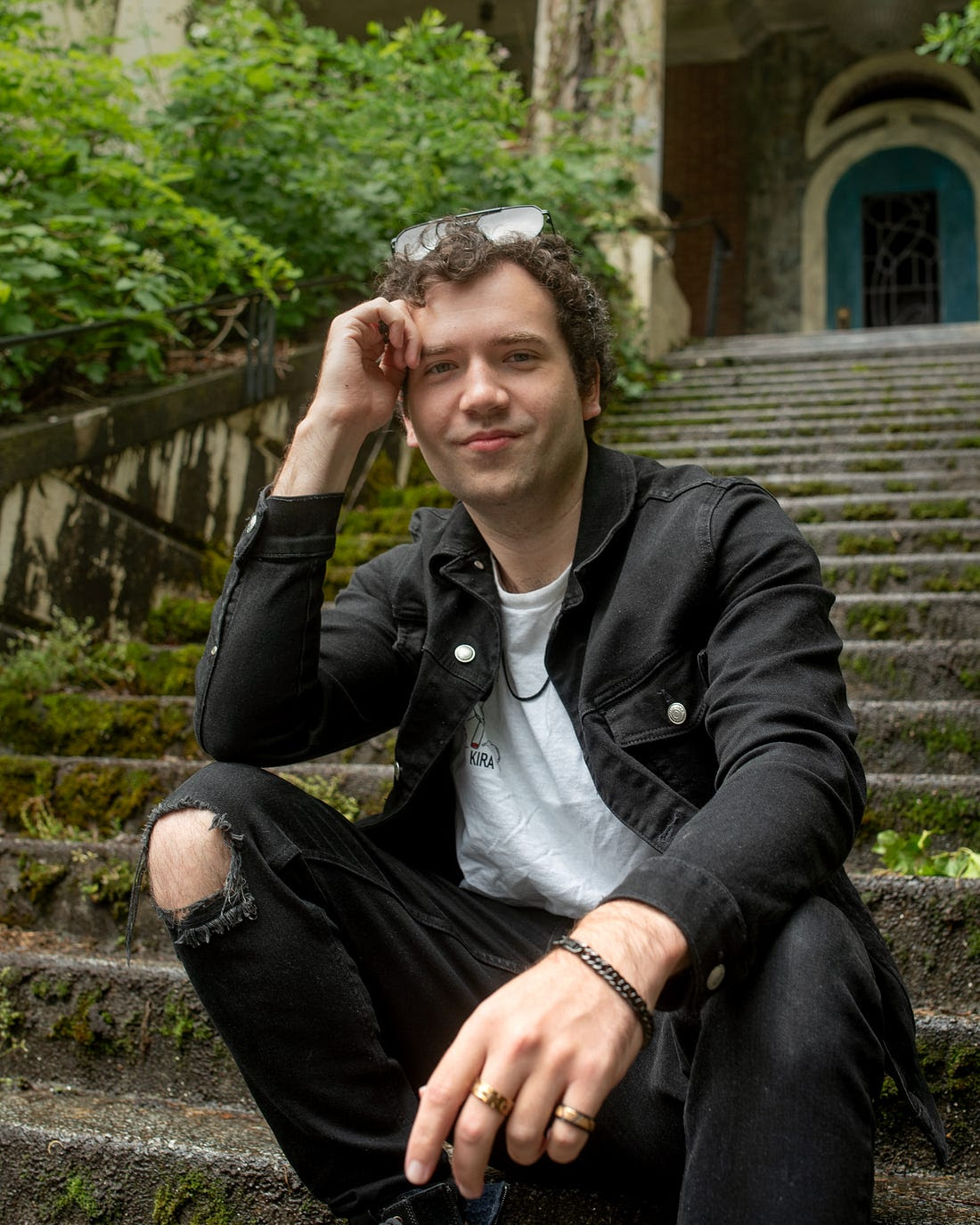
I looked into the camera on my phone, and he looked into his. At last, the man with a million names had a face—a pale, boyish one that looked younger than it was. He was clean-shaven, with a tuft of curly brown hair, sitting in a cramped, slightly disheveled bedroom. A guitar hung on the wall. His name, he told me, is Aaron Barry, and he’s my age, 29. (To prove this, he sent me his ID.) He explained that he is an English-language tutor from Vancouver who began writing contemporary haiku in 2018, when he was in his early twenties and recovering from an illness. “I didn’t have much stamina for anything else,” he said.
 |
These are some of the imoplications:
— The triumph of fake poetry is inevitable when demographics dictate ediitorial policy and judgmnent is subordinate to poilitical expedience.
— The possibility, at least in the case of the Ern Malley hoax, that the effort to write poetry may produce good poetry if the intent is undertaken by talented writers to parody a literary tendency.
— The pronoun plague we have on hand exacerbates things.
— Change is likey if only because hoaxes and satires intended to ridicule often do achieve results.
But you must readthe whole piece!